Home Table of Contents

10 January 2024, Volume 33 Issue 1
    

  • Select all
    |
    Editorial
  • Mark Feng TENG, Jette G. HANSEN EDWARDS, Gavin BUI
    Asian Journal of English Language Teaching. 2024, 33(1): 1-8.
    Abstract ( ) Download PDF ( )   Knowledge map   Save
    The 8th Hong Kong Association for Applied Linguistics (HKAAL) conference, hosted at The Hang Seng University of Hong Kong, was a highly successful and well-attended event. With more than 130 presenters and participants from diverse academic backgrounds, the conference fostered vibrant discussions and mean- ingful exchanges on a wide range of topics in applied linguistics and language education. From the wealth of research presented, we carefully selected five empir- ical studies that exemplify the innovative methodologies and significant findings showcased at the conference for this issue. These selected works not only reflect the high academic standards of the event but also contribute valuable insights to the ongoing development of the field.
  • Research Articles
  • Daisuke KAWAMITSU, Osamu TAKEUCHI
    Asian Journal of English Language Teaching. 2024, 33(1): 9-36.
    Abstract ( ) Download PDF ( )   Knowledge map   Save
    In an investigation of students and teachers of various languages, Ruesch and colleagues (2012) discovered that the two groups held different perceptions regarding the effectiveness of motivational strategies (MSs). However, consid- ering learning environment significantly influences MSs (Dörnyei, 2001), situ- ating students and teachers in a more specific environment is recommended when comparing their perceptions. This study examines the perceptions of students and teachers sharing the same learning environment to identify any differences in perceptions regarding the effectiveness of MSs. The participants included 316 students of English at a Japanese technical college and six non- native English teachers. Statistical analyses on questionnaire data collected showed that both groups perceived the overall effectiveness of motivational strategy (MS) similarly, which is inconsistent with Ruesch and colleagues (2012). One possible interpretation for this discrepancy is that the current study was situated in a single second language (L2) learning environment—specifically English—whereas Ruesch and colleagues (2012) conducted their study in multiple L2 learning environments. Therefore, the teachers in this study had a better and more accurate understanding of how to motivate students. Addition- ally, no significant differences were found in students' perceptions of MSs across groups with different L2 proficiency and motivational intensity.
  • Anna Wing Bo TSO
    Asian Journal of English Language Teaching. 2024, 33(1): 37-52.
    Abstract ( ) Download PDF ( )   Knowledge map   Save
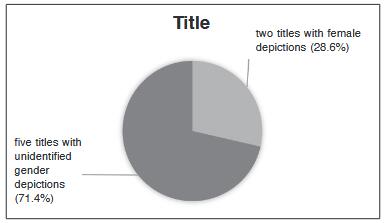
    Social justice and gender equality have long been promoted in schools and educa- tion sectors in Hong Kong. However, it remains unclear whether these efforts have led to meaningful changes in children's literature popular among Hong Kong readers. In particular, the extent to which recent children's books have moved away from male-dominated narratives and improved female representation warrants further examination. To increase gender awareness in young readers, parents, teachers, and librarians in the local community and beyond, this paper examines the gender representation in seven Grade 3 English e-chapbooks catego- rized under Reading Recovery (RR) level 22 (for readers aged eight to nine) in Highlights Library, one of the leading digital reading platforms in the world. In terms of the male-to-female ratio in the book titles, book cover illustrations, and central characters of eBooks at RR level 22, the study shows that female charac- ters outnumber male characters in most e-chapbooks catalogued in the digital library. Female characters are no longer underrepresented. In terms of gender discourses, Fairclough's critical discourse analysis (CDA) is used to observe the gender power relations in the narratives of the seven Grade 3 e-chapbooks. All seven e-chapbooks at RR level 22 exhibit different levels of influence from feminism
  • Amy KONG
    Asian Journal of English Language Teaching. 2024, 33(1): 53-86.
    Abstract ( ) Download PDF ( )   Knowledge map   Save
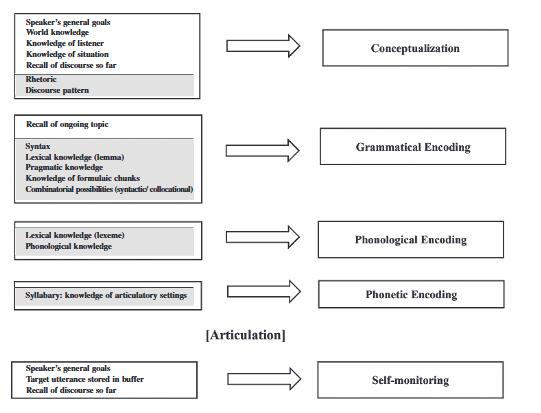
    Second language (L2) testing research over the last two decades has witnessed a noticeable shift from measuring multiple validities to presenting evidence to the argument-based validation framework, but seldom did they examine the argu- ment-based validity of the Hong Kong Diploma of Secondary Education Exami- nation (HKDSE) English Language speaking test (hereafter referred to as HKDSE speaking test), which is taken in the form of group interaction that considers not only the validation components based on Levelt's (1989) speaking model but also international competence. The current study aims to validate the HKDSE speaking test by presenting evidence to back the warrants drawn in the domain description, explanation, and utilization inferences within the argument- based framework. The study adopted the qualitative approach by analyzing different sources of artifacts, including the constructs, task test samples, marking criteria, and authentic group discussion samples, as well as transcripts of the interview with four prospective task-takers. Results indicate that despite high consistency between most constructs, marking criteria, and theoretical expecta- tions, the non-specifications of the interaction context, participants' roles, and task purposes in the majority of the test prompts make it hard to fully justify both the target domain and explanation inferences. The interviewees' disregard of the representativeness of the test scores in manifesting the language use in real-life contexts has also undermined its validity in terms of utilization inference.

  • Pui Lun CHOW
    Asian Journal of English Language Teaching. 2024, 33(1): 87-108.
    Abstract ( ) Download PDF ( )   Knowledge map   Save
    This study investigates the productive vocabulary knowledge of post-secondary associate degree students in Hong Kong and mainland China. Participants' productive vocabulary proficiency and lexical richness were analyzed using AntWordProfiler. The texts were compared to two-word lists: the New General Service List (NGSL) and the Academic Word List (AWL). The research also aims to explore the correlation between productive vocabulary proficiency and English language policy in the respective contexts of teaching English as a second language (ESL) in Hong Kong and teaching English as a foreign language (EFL) in mainland China. The findings challenge the assumption that years of ESL experience predict productive vocabulary competency, as extensive ESL learning histories did not result in higher lexical variation. This calls into question the input-proficiency assumption underlying many ESL pedagogical models. To address these issues, the study recommends an eclectic approach that integrates a Focus on Form (FonF) vocabulary training within an incidental approach, known as the incidental FonF approach. This approach combines incidental vocabulary learning with targeted exercises that employ diverse vocabulary learning strategies, aiming to enhance cognitive effort and engage- ment for effective vocabulary acquisition. The study contributes to the under- standing of productive vocabulary proficiency and provides insights for vocabu- lary teaching and learning in ESL and EFL contexts.
  • Jun CHEN, Min YU
    Asian Journal of English Language Teaching. 2024, 33(1): 109-140.
    Abstract ( ) Download PDF ( )   Knowledge map   Save
    Though gamification and videos are commonly applied in education, limited research studies university learners' attitudes towards the combination of gamifi- cation and videos within the new context of content and language integrated learning (CLIL) in China. To address this research gap, the present study employs the technology acceptance model (TAM) as a theoretical framework to investigate the perceptions of ten Chinese undergraduate students. Using a mixed-methods study approach, data were collected through questionnaires and follow-up semi-structured individual interviews after participants completed a gamified, video-based CLIL lesson (GVBCLILL) on Moodle. Results revealed that participants generally held positive attitudes toward using GVBCLILL for autonomous learning of content and language. However, concerns were raised about the efficiency of learning subject-specific content through this approach. Additionally, students were reluctant to practice their productive writing using the GVBCLILL. Based on these insights, several improvements that could be made for the GVBCLILL were suggested: shortening the lesson time, diversi- fying learning tasks to enhance student engagement, offering more choices in learning content, and providing sufficient scaffolding and instant feedback on both content and language. In light of these findings, the improved GVBCLILL may be considered as an option for self-regulated learning among learners in similar educational contexts.
  • Book Review
  • By Alice Yin Wa Chan, Reviewed by Chi Wui NG
    Asian Journal of English Language Teaching. 2024, 33(1): 141-146.
    Abstract ( ) Download PDF ( )   Knowledge map   Save
  • By Jun Lei, Guangwei Hu, Reviewed by Tsun Sing HUNG
    Asian Journal of English Language Teaching. 2024, 33(1): 147-151.
    Abstract ( ) Download PDF ( )   Knowledge map   Save